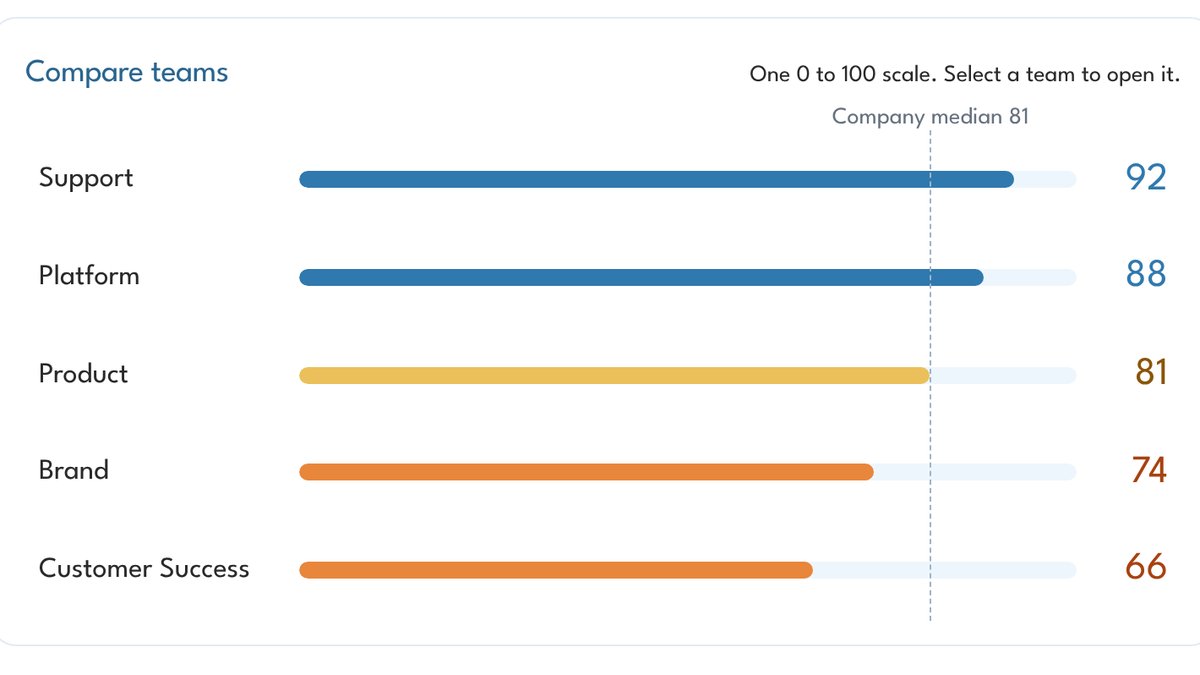
 See a sample QuestDash
How well do you know your team?
How well do you actually know how your team works together? Answer five quick questions and get a count of your blind spots, plus what each one hides. About 60 seconds.
Which best describes your team?
Your blind spots
The specific gaps your answers revealed, and how to close each one.
See your blind spots
Your count is above. Drop your email to unlock the specific blind spots your answers revealed and what each one hides.
Please enter a valid email.
No spam. Unsubscribe anytime.
What this measures
This is a count of your blind spots, not a score for your team. Each answer shows how confidently and specifically you can describe what is actually happening. vague or unsure = blind spot. The gaps below are where the dynamics are running without you seeing them.
That was your guess. Get your team's real score.
QuestWorks measures your team's Team Intelligence™ Score from how the whole team plays. One 25-minute quest gives you a score estimate and 4 recommendations. Free. No card.
What this self-check measures
Most leaders rate their team on output: shipped, closed, launched. That tells you what happened. It does not tell you whether you understand how it happened, or what is quietly building underneath. This self-check measures the second thing: your awareness of your own team's dynamics.
The dynamics that decide whether a team thrives or quietly stalls rarely happen in front of the leader. The hallway conversation after the meeting. The teammate who carries morale without anyone noticing. The two reports whose styles grate until it boils over. You cannot be in every room, so every leader has blind spots. The question is how many, and where.
This quiz turns that into a count. The more confidently and specifically you can answer each question, the fewer blind spots it finds. Hesitation and "I think so" are the signal: they mark the spots where something is running without you seeing it.
Why awareness, not output
You can manage what you can see. The friction you catch early costs a conversation. The friction you miss costs a resignation. Sizing your blind spots is the first step to closing them, and the leaders with the fewest blind spots are almost never the ones who assumed they had none.
The real, continuous version
This self-check is a one-time snapshot of your guess. QuestWorks measures the team itself: the Team Intelligence™ Score comes from how your team plays together in 25-minute quests, in a browser. Play regularly to sharpen it. Slack and Teams send game day reminders.
Frequently asked questions
What does this self-check measure?
How well you, the leader, know how your team works together. Not their output, your awareness of the dynamics underneath it: trust, friction, working styles, who carries the team quietly. Few blind spots means a tight read on your team. Many means a lot is running that you cannot see from where you sit.
How are the blind spots counted?
Five questions, tailored to your team type, each measuring how confidently and specifically you can describe what is really going on. Vague or unsure answers count as a blind spot. The result is a count out of 5 plus the specific blind spots your answers revealed.
Is a high count bad?
No. Every leader has blind spots. You cannot be in every conversation, and the dynamics that matter most rarely happen in front of you. A high count just means there is more upside in making the invisible visible.
How is this different from the Team Intelligence™ Score?
This self-check is your guess, from your own answers. The Team Intelligence™ Score is measured from how your whole team plays together in 25-minute quests, against the Team Intelligence™ standard. Your first score is free.
Get your free score.
One 25-minute quest gives your team a Team Intelligence™ Score estimate and 4 recommendations. Free, no card.
Get a free score