You can usually feel it within a few weeks.
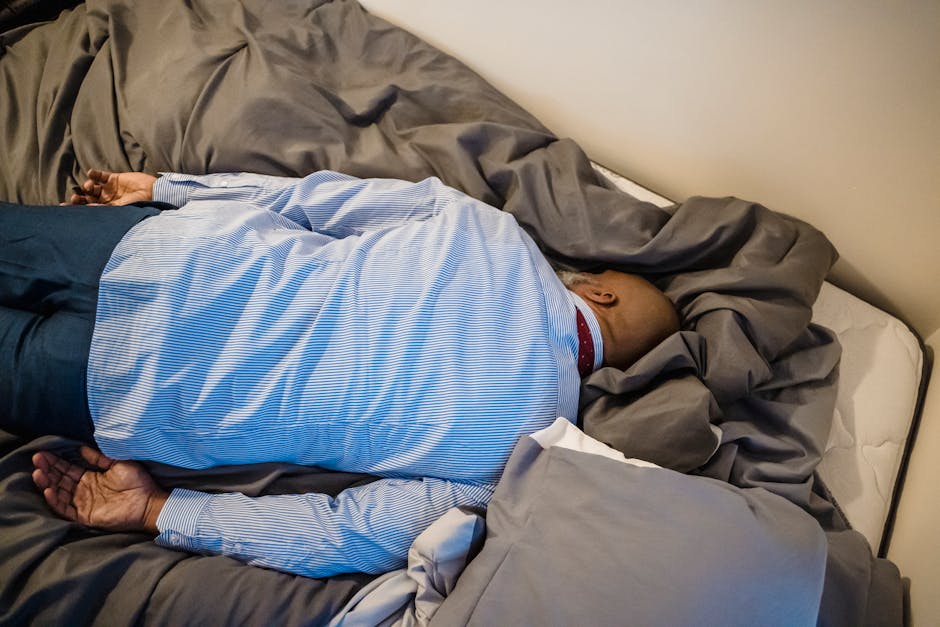
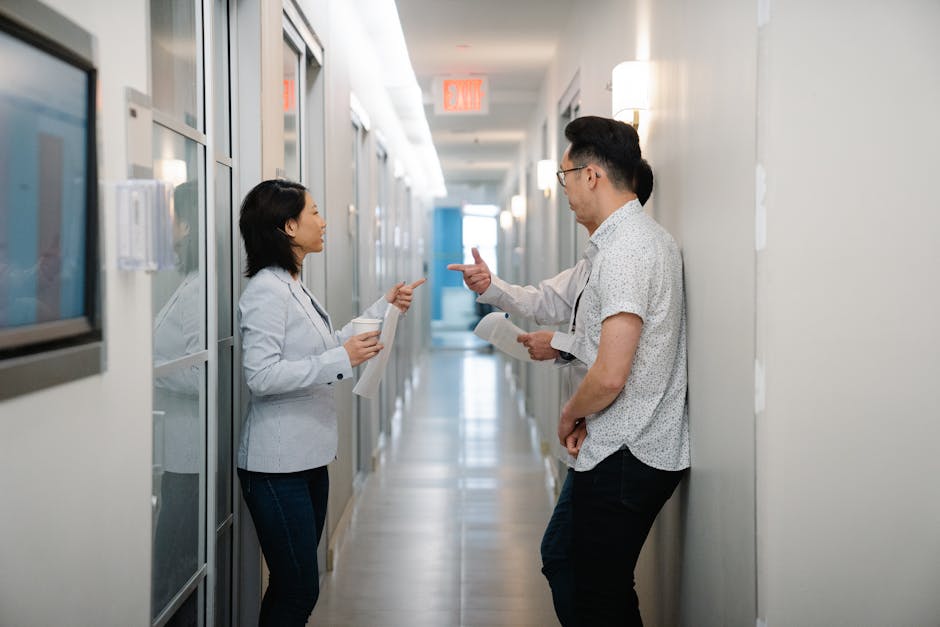
One teammate joins a call and the conversation gets sharper. Decisions land faster. Other people speak up more. Another teammate joins and the room flattens. Questions go unanswered. The agenda drags. Six months later one of these people gets a quiet promotion and the other one is "underperforming" and nobody can quite say why.
Most performance systems miss this. They measure tickets, ratings, OKRs. They do not measure what each person does to the energy of the people around them. Yet the energy pattern is often the strongest predictor of who actually drives the team and who is silently dragging it.
The question every manager asks is some version of: who is lifting this team, and who is draining it? Most managers are guessing. The answer that ruined trust at Barclays and Microsoft and Teleperformance was to install software that watches everyone until you find out.
There is a third way. The research is older than the surveillance backlash, and it is built around a question Rob Cross has been asking organizations for two decades.
The Question Every Manager Asks and Can't Answer
Microsoft's Work Trend Index named it "productivity paranoia." Eighty-five percent of leaders said hybrid made it hard to trust their people were being productive. Eighty-seven percent of employees reported they were being productive (Microsoft WTI). The gap between those two numbers is a management crisis hiding inside a measurement problem.
The reflex is to ask harder. Run more surveys. Tighten the dashboard. The reflex doesn't work. McKinsey's review of survey fatigue found only 59% of employees complete a fourth or later survey within a year, with response rates falling 24% below those surveyed once or twice. The root cause, McKinsey argued, isn't fatigue with the questions. It is the belief nothing will change (McKinsey on survey fatigue). Annual engagement scores arrive long after the patterns they would have caught have already cost the team a hire.
The invisible cost has two halves. The invisible energizer: a teammate whose contributions don't fit the OKR sheet but whose absence the team would feel within a week. The invisible drain: not a bad performer, often a strong individual contributor, but a person whose interactions leave others smaller. Both unmeasured, both compounding, and neither caught by a pulse survey filled out at 11 PM the night before the deadline.
What the Research Actually Says
Anita Woolley's 2010 Science paper on collective intelligence is the cleanest starting point. Across two studies with 699 participants, she and colleagues found team performance had a "c-factor" that predicted future performance on new tasks, much like individual IQ predicts individual performance. The kicker: c-factor was not significantly correlated with the average or maximum IQ of the team. It correlated with three things: social sensitivity of members, equal turn-taking in conversation, and the proportion of women on the team (Woolley et al., Science, 2010). The smartest individuals on a team do not produce the smartest team. The pattern of interaction does. (Bates et al. 2017 argued IQ explains more of c-factor than the original paper claimed, but the turn-taking and social-sensitivity finding has held up.)
Rob Cross and Andrew Parker built the bridge from "interaction pattern" to "specific people." In The Hidden Power of Social Networks, they asked thousands of employees a deceptively simple question: when you interact with this person, how does your energy change on a 1-to-5 scale? The answers produced what Cross calls energy network analysis. Across companies, people with high energizer scores were two- to four-times more likely to be high performers. People closely connected to energizers also outperformed peers connected to neutral or de-energizing colleagues (Cross and Parker, energy-network research). Cross's later work for the Connected Commons consortium found 15 to 20 percent of employees are "collaboratively overloaded," and attrition risk for those connected to overloaded teammates runs up to 200% above average (Cross on organizational network analysis).
Sigal Barsade's Administrative Science Quarterly "Ripple Effect" study gives the mechanism. A single person's emotional state shifts the affective climate of the whole group, often within minutes. Positive contagion improves cooperation; negative contagion does the opposite. The effect is strongest in stable, interdependent workgroups, which is to say, in teams (Barsade, 2002, ASQ). Hatfield, Cacioppo, and Rapson's earlier work on biological contagion shows the spread happens in milliseconds and is mostly unconscious. The teammate who walks into the standup carrying yesterday's frustration is moving the team average, whether or not anyone names it.
Amy Edmondson's 1999 nursing-team study has a finding that confuses people the first time they hear it. Higher-performing units reported more medication errors than lower-performing units. The reason wasn't that they made more mistakes. It was that psychological safety let real signal surface. In fearful teams, the problems still existed, but they were hidden (Edmondson, 1999). The same effect applies to energy mapping. A team without safety will tell you everyone is fine. A team with safety will tell you what is actually happening, including who is exhausted, who is carrying too much of the load, and who they wish was in the room more.
Project Aristotle at Google studied 180 teams and found psychological safety was the number one predictor of team effectiveness, ahead of composition, collective IQ, and tenure (Project Aristotle). Hackman's six conditions for team effectiveness account for up to 80% of variance in team performance (Hackman six conditions). The research is consistent: the people factors and the interaction factors dominate the individual-talent factors. Which means an energy map, done well, is a closer proxy for performance than most performance systems are.
The Surveillance Trap
Most companies break the experiment here.
In 2020, Barclays deployed Sapience Analytics across UK staff. The software produced individual reports flagging time "not in the Zone," logged bathroom breaks, and nudged employees about idle time. The UK Information Commissioner's Office opened an investigation. Barclays withdrew the system within weeks (Barclays case). The same year, Microsoft launched Productivity Score with per-employee email, chat, and document activity exposed to managers. By December 2020, Microsoft had pulled the individual-level features and rebuilt the product as Viva Insights, aggregate-only (Productivity Score). In 2021, NBC News reported Teleperformance contracts in Colombia authorized AI-powered home webcam, biometric, and family-data capture for remote call-center agents. Albania later banned home webcam monitoring outright (Teleperformance case).
The receipts on what this kind of measurement does are now in the literature. HBR's February 2024 piece on workplace surveillance, drawing on multiple studies, reported 42% of monitored employees plan to leave within a year, versus 23% of unmonitored employees, and 59% say digital tracking has damaged trust with their employer (HBR, 2024). The very thing the company hoped to improve, retention and engagement, gets worse the moment the measurement turns into per-person scoring.
Energy mapping sits dangerously close to this if it is implemented wrong. A "who lifts the team" report that flows up the chain as a per-employee ranking is a peer-review surveillance product, no matter how friendly the language. Latham and Wexley's research on peer ratings showed meaningful validity in aggregate (corrected validities near r = .69 in some studies) but consistently lower interrater reliability than supervisor ratings, and clear similarity biases that compound when used for individual evaluation (Latham and Wexley). Peer perception is useful as one signal of many. It is not a verdict.
Sandy Pentland's MIT Human Dynamics Lab demonstrated that sociometric badges could capture turn-taking, prosody, and physical proximity with high precision (Pentland on social physics). The methodological finding is influential. The instrumentation is ethically contested for good reason. The lesson is not that the data is wrong. The lesson is that the way you collect it determines whether the team learns from it or revolts against it.
A Privacy-Respecting Alternative
Five principles separate honest energy mapping from surveillance with a friendlier name.
First, observed multiplayer behavior beats peer opinion polling. Surveys ask people what they think other people do. Multiplayer behavior shows what the team actually does together. Engagement is the activity, not a tax on top of the activity. McKinsey's survey-fatigue finding cuts directly against asking the team a battery of peer-rating questions every quarter.
Second, aggregate team patterns, not individual rankings. Cross's network analyses succeed because they look at relationships and roles, not single scorecards. Edmondson's safety findings hold because the unit of measurement is the team. Google's Project Aristotle reported findings back to teams, not up to managers as a ranking. The teams that adopted new norms after the feedback improved roughly six points on psychological-safety ratings.
Third, anything individual-facing should be strengths-based. Gallup's analysis across 65,672 employees found that focusing feedback on strengths produced 12.5% higher productivity, 8.9% higher profitability, and 14.9% lower turnover than control conditions (Gallup strengths-based feedback). The behavior counts you collect on individuals should surface what they did well, not where they ranked. The Gallup Q12 best-friend-at-work item, often misunderstood as literal, is a proxy for trust density in a team's relationships. Teams with higher trust density are seven times more likely to be fully engaged (Gallup on best friend at work).
Fourth, keep a private coaching loop. Individual development needs an individual feedback channel. It does not need to flow upward. The principle behind Connected Commons's "no individual performance use" governance is that the moment data becomes evaluative, people start performing for the sensor and the signal collapses (Connected Commons). Coaching has to be private to be honest.
Fifth, make it continuous, not quarterly. Annual or even quarterly reviews capture the team six months after the energy pattern started shifting. The Cross attrition data shows that connection to overloaded teammates raises departure risk before any survey would catch it. Week-after-week observation, even of low-fidelity behavior, beats a high-fidelity snapshot taken too late.
What Managers Can Do Monday
You don't need a platform to start. You need a notebook and two questions.
Pick one or two meetings this week. Notice turn-taking equality. Note who speaks first, who speaks longest, who never speaks, and whose contributions land in later comments. Woolley's c-factor work suggests turn-taking equality tells you more about team intelligence than the seniority of who is in the room. You are not grading anyone. You are noticing the structure of the conversation.
Second, in your next round of 1:1s, ask Cross's question, rephrased: "Who on this team energized you this week? Whose work or presence made yours better?" Aggregate the answers. Do not name names up the chain. Look for the people who get mentioned across multiple 1:1s. Those are your invisible energizers. Notice also who is missing from anyone's answer. That is not a verdict on them. It is a signal that some relationship is thinner than the org chart implies.
Third, notice patterns over weeks, never act on a single signal. Peer perception across many moments averages toward something real. If the same person shows up over four weeks as the teammate others bring into hard problems, you have signal. If they show up once, you have a Tuesday.
Fourth, when you see overload, redistribute before the person tells you they are leaving. Cross's 200% attrition risk for teammates connected to overloaded colleagues punishes managers for waiting. The person carrying everyone else is also the person others start to leave around.
Where QuestWorks Fits
The hard part of energy mapping is that the act of measuring usually corrupts the thing being measured. The teams that get rated turn into teams that perform for the rater. The teammate who knows their behavior is being scored will optimize the wrong variables. Pentland's badge problem in miniature.
QuestWorks runs on its own cinematic, voice-controlled platform. Each week, teams of 3 to 6 take 25 minutes to play through an AI-facilitated quest. Behavior surfaces in how the team handles shared decisions under mild time pressure, not in answers to a survey about the team. HeroGPT, accessed through the Slack integration, gives every player private coaching after the quest. That coaching never flows upstream. The Weekly Team Health Report gives leaders aggregate patterns: how participation distributed across the team, which strengths surfaced, where friction concentrated. Individual-facing highlights on QuestDash are strengths-based by design (a teammate sees that they delegated well, asked the question that unblocked the group, made the call that saved the run), never punitive, never tied to performance reviews. The 9 HeroTypes are public. XP breakdowns are visible per player but always positive.
Nobody gets ranked. The pattern Cross's research has been mapping for two decades surfaces in a way the team learns from instead of resents. Pricing is a flat $199 a month for your team and a 30-day free trial. Start a free trial and let a few weeks of game days surface the picture. It usually looks different from the room you imagined.