What Co-Located Managers Got for Free
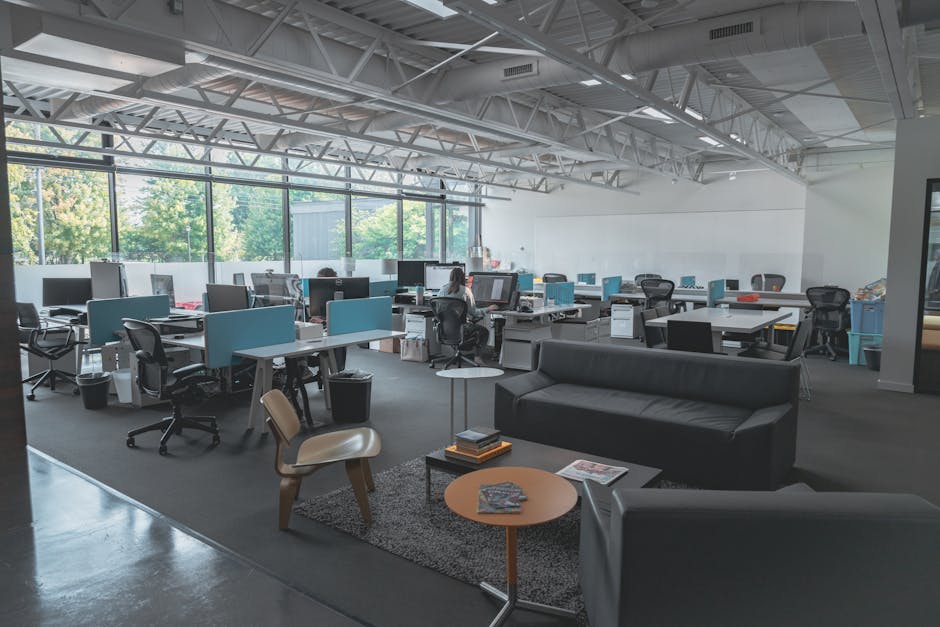
A manager walking the floor in 2019 received continuous ambient information they never had to ask for. Who was eating lunch with whom. Whose voice got quieter in the standup. Who stopped responding to the casual "how's it going" and started giving a clipped one-line answer. The signal was always running, and the manager processed it in the background.
That signal is gone. Microsoft's 61,182-employee Nature study found that going firm-wide remote reduced weak ties by 32% and cross-group collaboration time by 25%. Bridging ties (the cross-team connections that surface friction before it becomes formal conflict) fell by 9%. The ambient stream that used to arrive via hallway exposure simply does not arrive on Zoom. And SHRM data shows 42% of managers admit they sometimes forget about remote workers entirely, while only about 30% of hybrid managers have received any formal training for the transition.
The cost is downstream. The 2022 Myers-Briggs Conflict at Work refresh found employees now spend 4.34 hours per week on conflict, up from 2.1 hours in the 2008 CPP baseline. 36% deal with conflict "often" or "always." The 2024 SHRM Civility Index put the cost of workplace incivility at roughly $2.17 billion per day, with 66% of workers reporting they witnessed or experienced incivility in the past month. Most of that friction was visible weeks before it escalated. It just was not visible to anyone with the authority to redirect it.
The Five Friction Signals
Friction does not jump directly to conflict. It moves through a recognizable pipeline, and the early stages leave behavioral residue. These five signals are the most reliable, drawn from observational telemetry research and decades of conflict-process research from Jehn, De Dreu, and DeChurch.
| Signal | What Shifts | Research Anchor |
|---|---|---|
| 1. Response-time decay | Reply latency to a specific teammate stretches against baseline | Microsoft Viva Insights telemetry |
| 2. Vocabulary divergence | "We" gives way to "I / you / they"; cynicism markers appear | Pronoun research; Maslach Burnout Inventory |
| 3. Async absences | Drops from peer threads, project channels, code reviews | Yang 2022; HBR departing-employee pattern |
| 4. Peer-feedback drift | Recognition silence; review quality and rating decline | DeChurch et al. 2013 process-state research |
| 5. Optional-ritual opt-out | Demos, retros, social rituals skipped without comment | Microsoft Viva HBR 2022 (with caveat) |
1. Response-Time Decay
Microsoft Viva Insights research shows that reply latency between two specific teammates is one of the earliest telemetry markers of friction. The signal is not absolute speed. A teammate who has always taken six hours to respond is not friction. The signal is the delta against that pair's own baseline. When the average reply window from A to B stretches from four hours to fourteen hours over three weeks, while A's replies to everyone else hold steady, the pattern is pointing somewhere.
2. Vocabulary Divergence
Linguistic research on pronoun use finds that joint identity correlates with "we" language, and the shift to "I / you / they" tracks with conflict escalation. Cynicism markers (the second stage of Maslach's burnout inventory) appear in parallel. A 2025 Frontiers in Organizational Psychology study identified a "disengaged profile" where high cynicism sits closer to full burnout than pure exhaustion does. When standup updates start including phrases like "they decided" or "I had to fix it because nobody else," the pronoun cracks are already running through the team.
3. Async Absences
The Yang Nature study showed that remote arrangements collapse weak ties first. Strong-tie peer threads usually survive the longest, so when someone goes missing from threads with their closest collaborators, it is a louder signal than absence from cross-team channels. HBR's 2022 analysis of Microsoft data found that departing employees attended 67% fewer spontaneous 1:1s, 22% fewer planned 1:1s, and 20% fewer planned group meetings before leaving. The same withdrawal pattern shows up before conflict surfaces, not just before resignation.
4. Peer-Feedback Drift
DeChurch and colleagues' 2013 conflict process research showed that conflict processes (how teams handle disagreement) explain 13% additional variance in team outcomes beyond the conflict states themselves. Recognition silence is one of those processes. When a teammate stops giving public credit, stops adding thoughtful review comments, or starts handing back perfunctory ratings, the team's feedback economy is contracting. That contraction precedes the moment when someone says, "I do not feel respected here."
5. Optional-Ritual Opt-Out
Demos, retros, lunch-and-learns, the optional Friday social. When a teammate stops showing up to the things they used to show up to, something changed. The caveat that follows matters more than the signal itself.
Pattern Over Baseline, Never Threshold
Every signal above fails as a threshold. Reply latency over 24 hours is not friction; for some teammates it is normal. Skipping a retro is not friction; sometimes calendars collide. Using "I" instead of "we" is not friction; sometimes the work really was individual.
What matters is pattern against the team's own baseline, sustained over two to three weeks, and corroborated across more than one signal. One signal is noise. Three signals shifting together is information. The HBR analysis explicitly warned that the 67% / 22% / 20% meeting drop applied to departing employees retrospectively, not to live early-warning detection. Workers who decline more meetings are not necessarily disengaged. They are sometimes just attending shorter, more spontaneous 1:1s in different shapes. Read the deltas in context.
The Surveillance Edge
High5's 2025 Remote Work Security Index found that 74% of US employers use some form of digital tracking and 63% of workers are actively concerned about it. One in three monitored workers report it has hurt their mental health. A February 2024 HBR review concluded that surveillance erodes trust and puts managers in a bind: the more closely employees are tracked, the less honest behavior managers see.
So the framework above only works if the visibility is aggregate, transparent, and team-level. Not individual logs. Not keystroke counts. Not anyone's calendar pulled into a manager dashboard. The version that respects trust looks at team-wide shifts in shared, opt-in spaces: how the whole team's pronoun pattern is moving in a retro doc, how participation in voluntary rituals is trending in aggregate, what the team's own self-reports surface in checkpoints they chose to attend.
The five signals are real. The collection method determines whether they read as care or as policing. A direct conversation with the team, framed around the patterns the team itself is noticing, beats any dashboard.
The Curvilinear Caveat
The other failure mode is treating friction itself as the enemy. O'Neill, Allen, and Hastings' 2013 meta-analysis confirmed an inverted-U relationship between task conflict and innovation. Teams with too little task friction underperform teams with moderate friction. The curve drops off on both sides.
The job is not to drive friction to zero. The job is to catch the slide from task disagreement (productive) into relationship or process conflict (consistently destructive). Karen Jehn's foundational 1995 and 1997 work separated those three categories and established that task conflict can help teams while relationship and process conflict almost always hurt them. A team where nobody pushes back on a bad idea is failing differently from a team where everyone is sniping at each other, but both are failing. Productive conflict requires shared belief that the team can handle disagreement, and that belief needs evidence the team can point at.
What to Do Without Monitoring
Five rituals catch the same friction the dashboard would catch, in ways the team actively wants to participate in.
Run a weekly pattern check on yourself, not on people. Ask: which two teammates' interactions look different this week than they looked a month ago? Do not log it. Do not chart it. Notice it and do something about it within seven days.
Use retros to surface friction in the moment. A standing prompt like "where did we lose energy this week?" gets at the same data response-time decay would give you, sourced directly from the team. Cross-functional teams especially need this because process conflict is their default state.
Make working styles public early. If everyone's preferences are visible before the first disagreement, vocabulary divergence is less likely to start. Differences read as "Sam needs async time to think" instead of "Sam is being difficult."
Schedule short, regular checkpoints with no agenda. The five-minute "anything weird this week?" 1:1 produces the signal a hallway used to produce. GitLab's public managing conflict handbook treats writing and explicit channels as the proximity replacement, with clear peer-to-manager escalation paths.
Surface friction through shared activity, not observation. The fastest way to see how a team handles pressure is to put them in a situation that creates a little pressure together, with their consent and participation, and let the patterns surface in the shared experience.
QuestWorks: Patterns From Shared Play, Not From Logs
QuestWorks runs 25-minute multiplayer quests for the whole team on its own platform, with three to six teammates making decisions under shared time pressure. The behavioral patterns surface in the play itself: who adapts when the plan breaks, who reaches for the group when stuck, who holds firm and who folds. Nobody's calendar gets read. Nobody's keystrokes get counted. The signal comes from the shared activity, which the whole team plays.
HeroTypes are public to the team and give everyone the same shared language for working-style difference, which heads off the vocabulary divergence that turns task friction into relationship conflict. QuestDash is a strengths-based leaderboard visible to everyone, including the players themselves, with positive callouts only. Leaders receive a separate Weekly Team Intelligence Score with aggregate trends and strengths-based highlights, never individual logs or per-quest detail. HeroGPT coaching in Slack stays private to the player; nothing escalates upstream without their initiation.
None of this is a substitute for conversation. It is a substrate that makes the conversations easier because the team is already practicing how to disagree productively in a low-stakes setting, week after week. Quests are never tied to performance reviews. The point is to catch friction earlier, when it still has the shape of a productive task disagreement, before the curve falls off.
The Pipeline Is Predictable
Friction does not become conflict overnight. It runs through a sequence: response delay, vocabulary shift, async withdrawal, feedback contraction, ritual opt-out. The sequence is observable, but only if you know what to look for and only if you collect the signal in a way that does not break the trust you are trying to protect. The job of a hybrid manager is to read the early stages with the same fluency a co-located manager once had. The tools are different now. The signal is still there.
What is your default when work gets tense: compete, collaborate, compromise, avoid, or accommodate? Find out in about 4 minutes.
Take the free conflict style quiz