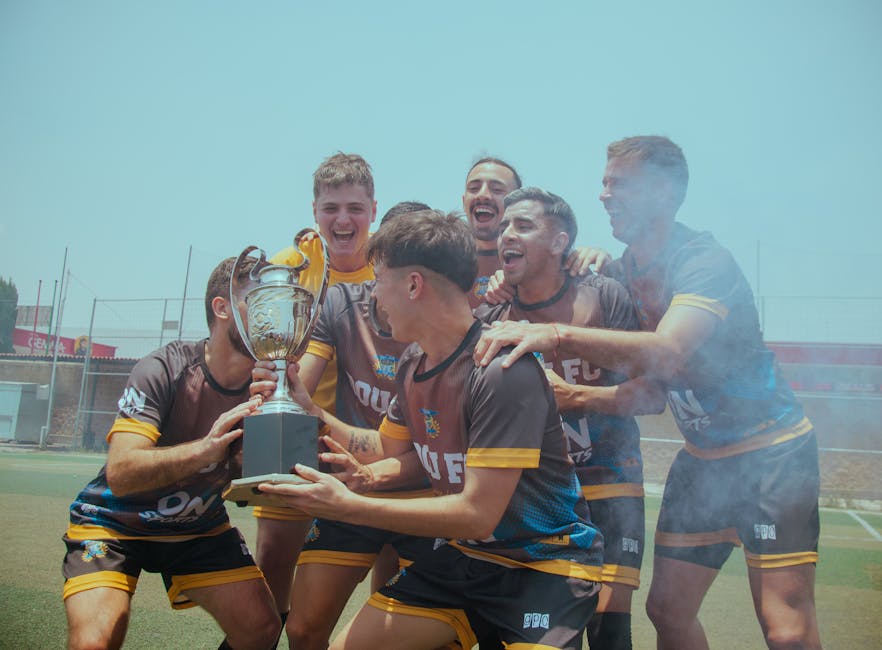
Name the pattern: the Stacked-Stalled Pattern. A team of stars that produces less than the sum of its parts. Headcount is loaded with senior talent. Calendars are full. Slack is loud. Output is flat.
April 2020. Quibi launches with $1.75 billion in funding, Katzenberg as founder, Whitman as CEO, a Hollywood studio backing every short. Six months later the service is dead. The Bloomberg post-mortem paints a familiar picture: dual CEOs reversing each other's decisions, senior talent nodding in meetings and unwinding calls in DMs, a roadmap that never quite became one (Bloomberg, 2020). The talent was real. The team chemistry never formed.
Individual brilliance does not guarantee collective success. The gap between your stars is where productivity leaks, silos form, and momentum dies. What follows is a manager's inventory: seven symptoms, three chemistry deficits, and what to look for before the trophyless season becomes a death spiral.
Symptom 1: The Meeting That Should Have Been Three Slack Messages
Eight calendars block-held Tuesday "alignment sync." Forty-seven minutes of status updates everyone already read in Notion. The actual decision (whether to ship the launch banner Friday) gets sixty seconds at the end, and even then someone says "let's circle back." Repeat Wednesday. Repeat Thursday.
Atlassian's State of Teams 2024 found 93% of Fortune 500 executives believe their teams could do the same work in half the time, with roughly 25 billion hours wasted per year on coordination overhead (Atlassian, 2024). Bain's decision-effectiveness research adds the consequence: a 95% correlation between decision effectiveness and financial performance (Bain). Slow decisions are a profit line item.
The cost is decision-velocity collapse, and the mask is a missing operating system for who decides what. The roster has every skill the work requires. It also has no agreed answer to a simpler question: who actually owns the call. The meeting exists as a hedge against that ambiguity. It feels like rigor. It is a tax paid by senior people for the absence of clarity. The fix is not "fewer meetings"; it is naming the owner of every recurring decision so the forum can shrink.
Symptom 2: The Quiet Reversal
The room nods through the roadmap on Tuesday afternoon. Tuesday 9:14 p.m., three Slack DMs from the senior PM unwind the entire decision. Wednesday standup, the "decision" has become "still being thought through." The team has now had the same conversation three times in the open and once for real.
Amy Edmondson calls this voice-silence asymmetry: concerns surface only after the meeting ends, often only after the project has failed (Edmondson, 1999). The room produces consensus theater; the DM channel produces the real decision graph.
The cost is what Bain calls decision yield: the percentage of decisions that actually get executed (Bain). The velocity number looks fine because meetings end with apparent agreement. The yield number is hollow because the agreement was performative. What it masks is a room that is not safe to dissent in. Senior people learned long ago that disagreeing in front of the wrong audience costs political capital, so they go silent in the meeting and reverse in the DM. The deficit is psychological safety, not communication style. Coaching people to "speak up more" without addressing why they stopped is theater on top of theater.
Symptom 3: The Half-Built Onboarding
New hire, week one. The project is already 60% architected in someone's head. Two engineers reference a Slack thread from October the new hire cannot read. By week three, "still ramping" has become a polite way of saying "still excluded." By week eight, the new hire is either job-hunting on the side or has stopped asking questions in the channel.
BambooHR's 2023 research found only 12% of employees say their company onboards them well, and 22% of new hires quit within the first 90 days (BambooHR, 2023). The number compounds on a stacked team because the senior bar means each rehire is more expensive than the last.
The cost is replacement plus lost institutional momentum. The team rebuilds the same context three times a year because the context lives in heads, not in a written operating system. Twitter post-Musk is the apex example: half the staff cut, "hardcore" ultimatums driving senior engineers out, microservices breaking live because the people who knew the systems were gone (Washington Post, 2022). When in-head knowledge is the operating model, every departure is a load-bearing wall. The fix is not a Notion page no one reads; it is a ritual that forces the team to externalize what it knows.
Symptom 4: The Senior Silo
The principal engineer answers six DMs a day about systems only they understand. The #eng channel has tumbleweeds. Junior ICs solve the same problem the principal already solved in March; they just have no idea it was solved. The principal feels indispensable and exhausted. The juniors feel like they are bothering someone every time they ask.
Yang et al. studied 61,000 Microsoft employees through the 2020 remote shift and found cross-group collaboration fell by roughly 25% while networks became more static and siloed (Yang et al., Nature Human Behaviour, 2022). The pattern persists on stacked teams because seniority produces hub-and-spoke graphs by default.
The cost is knowledge trapped in a one-to-one graph instead of compounding across the team. This is the structure behind hyper-productive silos: each senior node is locally efficient and globally corrosive. Real Madrid's Galácticos era (2003 to 2006) is the sports archetype: Beckham, Figo, Zidane, Ronaldo on the same roster, three trophyless seasons, in part because the midfield lost its directly responsible individual after Claude Makelele left and senior players' positional overlap turned the structure into a star graph instead of a network. The mask is status hierarchy: DMing the senior is a deference signal; posting in the channel feels risky because being wrong in public costs more than being wrong in a DM. The fix is a forum where channel-posting is the default and the senior person models the behavior by asking dumb questions out loud.
Symptom 5: The 4.5-Star Retro
Sprint retro, every Monday. Everyone rates the sprint a 4 or a 5. "Anything to improve?" "Not really, good sprint." Friday at 4:47 p.m., the design lead texts the PM venting about an engineer no one is willing to name in the room. The retro instrument is producing compliance signal, not improvement signal.
Edmondson's 1999 paper in Administrative Science Quarterly established psychological safety as a necessary precondition for team learning. Without it, retros surface what people are willing to say in front of the manager, not what people actually believe (Edmondson, 1999; Google Project Aristotle).
The cost compounds underground. Harvard Business School's Housman and Minor found that good employees are 54% more likely to quit when working alongside a toxic colleague, with a conservative replacement cost of $12,489 per year of damage to peers (HBS Working Paper, 2015). On a stacked team, that contagion is more expensive because every flight risk is more expensive. The mask is the instrument itself: real feedback lives in DMs and never reaches the system that could act on it. Yahoo's stack-rank era under Marissa Mayer is the cautionary tale: a forced-curve system that made retros punitive and turned teammates into competitors (HBR, 2015).
Symptom 6: The Authority Vacuum
Four senior PMs on the launch. Three Slack threads about the launch. Zero directly responsible individuals. Thursday, everyone assumes someone else owns the comms plan. Friday morning, there is no comms plan. By Friday afternoon, the founder is writing the comms plan.
Apple's DRI framework was designed precisely to eliminate this ambiguity in cross-functional groups (Tettra, DRI guide). Hackman's "real team" condition requires boundedness and interdependence; ambiguous authority violates both (Hackman, HBS). Bain's decision-yield collapse shows up most violently here: decisions exist on paper, but no one executes them in practice.
Quibi's dual-CEO structure is the canonical case. Katzenberg owned content vision; Whitman owned operations; neither owned the integrated product call, so every cross-cutting decision required a renegotiation. The roster was stacked. The authority graph was hollow. The mask is an org chart that looks loaded with an operating model that is empty. The fix is to name a DRI per decision class (launch, hire, architecture, comms) and publish the list where everyone can see it. Authority without visibility is rumor.
Symptom 7: The Hallway Decision Made on a Zoom
Sixty-minute roadmap call, eight people on the grid. Discussion is broad, polite, abstract. Decision is deferred. Over the next 48 hours, two 1:1s and one DM thread settle the real call. Three teammates find out from the announcement on Monday and are appropriately furious.
Microsoft's Work Trend Index 2022 documented a 252% increase in weekly meeting time and 153% more meetings since February 2020 (Microsoft WTI, 2022). The 2024 WTI surfaced a hybrid-manager trust gap (Microsoft WTI, 2024). Coordination cost exploded; trust did not scale with it.
The cost is decisions made in side-channels with no audit trail, no shared context, and no peer challenge. On a stacked team this is especially corrosive because every senior person becomes a node in someone else's back-channel. The mask is a culture where the formal meeting is theater and the 1:1 is the real chamber of power. The fix is to push the decision back into the forum where the people affected can see it. Klarna's 2023 AI walkback (cutting roughly 700 roles to lean on AI, then rehiring after output quality dropped) is a related cautionary tale about replacing human signal loops with channels that look efficient but lose the signal (Fortune, 2025).
The Three Chemistry Deficits
The seven symptoms are not seven problems. They are seven tells of three chemistry deficits.
| Symptom | Chemistry Deficit |
|---|---|
| Meeting That Should Have Been 3 Slack Messages | Unclear decision rights |
| Quiet Reversal | Low psychological safety |
| Half-Built Onboarding | Asymmetric knowledge graphs |
| Senior Silo | Asymmetric knowledge graphs + status hierarchy |
| 4.5-Star Retro | Low psychological safety |
| Authority Vacuum | Unclear decision rights |
| Hallway Decision Made on a Zoom | Low psychological safety + unclear decision rights |
Three deficits, seven tells. Chemistry is the load-bearing layer, and stacked rosters can be built without it.
The Counter-Arguments
"This is just growing pains." Hackman's research counters: scaling does not fix structural issues, it amplifies them. The five enabling conditions either exist or they do not, and team size is a multiplier on the gap. The Galácticos era did not end because Real Madrid grew through it; it ended because the structure was finally rebuilt.
"Great teams have friction. We want some of this." True with a critical distinction. Edmondson and others separate task conflict (which compounds learning) from relationship conflict (which corrodes trust). The Stacked-Stalled patterns are predominantly relationship conflict disguised as task conflict. Friction that compounds is the kind your team can name out loud. Friction that corrodes lives in DMs.
"Any diverse team will have these issues." Anita Woolley's research on collective intelligence (the c-factor) undercuts this directly. Collective intelligence is driven by social sensitivity and turn-taking equality, not demographic mix or average IQ. The Stacked-Stalled Pattern is not a diversity problem; it is a chemistry problem that diversity tends to expose faster.
Why a Stacked Roster Makes It Worse, Not Better
Most management advice assumes the problem is the roster: too few senior people, the wrong skill mix, a missing hire. The Stacked-Stalled Pattern inverts the assumption. The roster is fine, sometimes exceptional. The problem is the operating tissue between the stars: who decides what, what is safe to say, who knows what. Hire your way out of a chemistry deficit and you have a more expensive version of the same team. Senior talent compounds the cost of each deficit because the calendars, the political weight, and the org-chart visibility are all more expensive. The team is not failing because the players are weak; it is failing because the players are strong enough to mask the structural problem until it becomes terminal. For a deeper look at what separates real teams from working groups, see What Makes a High-Performing Team (40 Years of Research).
The Deliberate Practice Layer
The fix is not another framework. The frameworks are clear; managers have read them. The fix is a forum where the team practices the behaviors under pressure, with the cost of failure low and the signal high. This is the design principle behind QuestWorks, the Team Intelligence Engine. QuestWorks runs teams of 3 to 6 through 25-minute scenario-based quests on its own cinematic, voice-controlled platform, with Slack and Microsoft Teams as the integration layer for install, invites, and HeroGPT coaching. The quests force the exact behaviors the seven symptoms suppress: real-time decision rights, interpersonal risk-taking, and shared knowledge under pressure.
The QuestDash surfaces aggregate trends and strengths-based XP highlights after each session, so leaders can see where decision rights got fuzzy, where the team defaulted to the senior voice, where the knowledge graph stayed too narrow. HeroGPT provides private AI coaching that never shares upstream. Nine public HeroTypes give the team a shared vocabulary for the chemistry they are building. Participation is voluntary; nothing is tied to performance reviews. A flat $199 a month for your team, with a 30-day free trial. The operating tissue between your stars is built by reps, not by reading. Your roster is stacked. The next question is whether your team has the chemistry to match it.
Which of the five dysfunctions is costing your team the most time? Rate 15 statements about trust, conflict, commitment, accountability, and results.
Take the free team dysfunction assessment